Search Site for Anything |
| |
 
Winter Storm Left Us Without Power
Intense winter storms in January left us with 4 feet of snow and no power, water or heat. Our passive solar house with a gridtied solar electric system works great when there’s sun. Doesn’t work at all when the utility power is down. (Read more)
|
|
Emergency Back-up Power for Essential Loads
|
|
|
What kind of backup power do you need?
Battery stored backup power allows you to use certain (or all) appliances when utility provided grid electricity is not available.
There are three main applications for backup power:
1. Emergency Battery Backup Power. The Emergency Backup Power packages on this page are designed to provide power for home or business when the grid is knocked out by natural disaster, or when there are rolling blackouts. These systems are also appropriate for remote cabins or homes or telecommunication systems where no grid power is available. They are essentially small offgrid power systems which can operate independent of the grid when the grid is not available if you add solar panels or another source of power.
|
2. Battery Backup Power can be added alongside an existing grid intertied solar power system. When the grid goes down, a gridtie solar system goes down, too, unless you have added a bank of batteries and planned for an additional source of electricity generation. The extra source of electricity may be a gas generator or additional solar panels. These simple battery backup power systems do not make use of your existing gridtied solar panel array(s). See sample packages of complete Battery Backup Power for Solar Gridtie.
3. Gridtie to Offgrid. Backup power that is AC coupled to your Gridtie Solar Power System. Also for homes and businesses, these packages recharge your battery bank with the solar panels of your gridtie system. This gives you independence from the grid during emergencies or whenever you want!
|
|
Emergency Battery Backup - All Pre-wired & Pre-tested
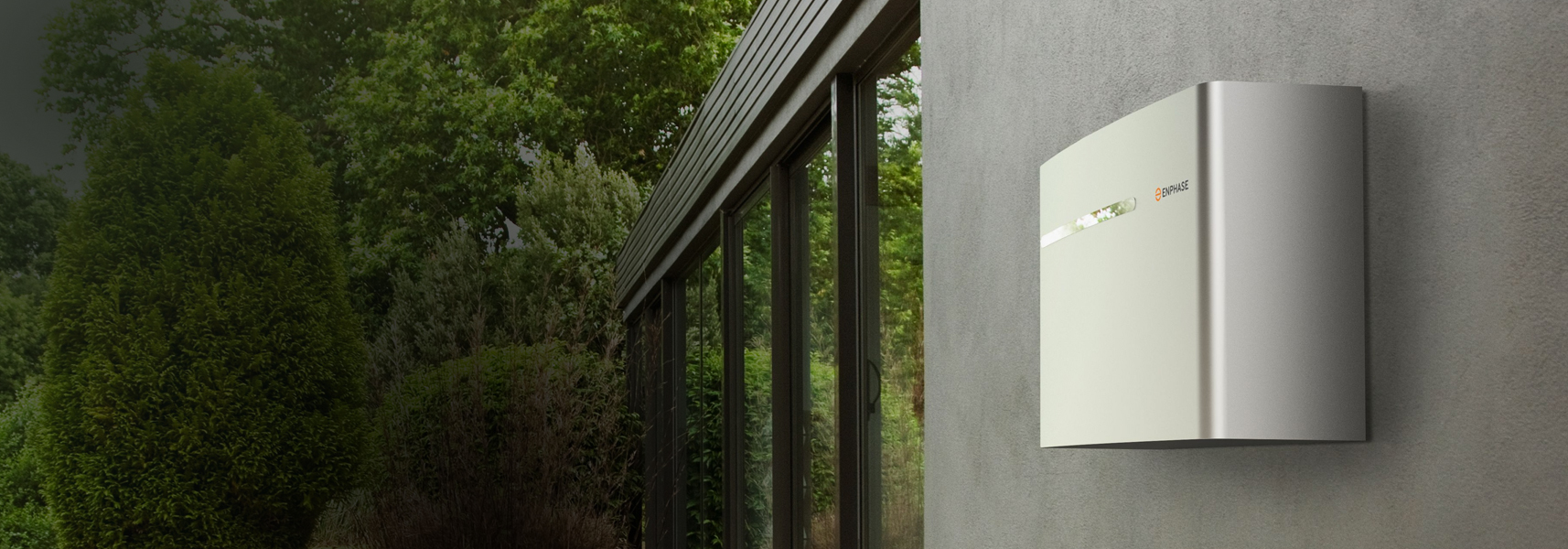
The Backup Power systems below include 4 or 8 batteries which can be charged by regular utility provided electricity when the grid is online or (except for the 4400 Outdoor version) by wind or gas generator or by solar panels. The packages include attractive steel battery enclosures, fully wired for safety and lockable.
| Backup Power Model |
Inverter Output |
Watt Hours |
AC Volts |
# of Batteries |
Solar Panels |
Power Supply |
Part Number |
Price |
|
1,800
watts |
720 |
120 |
3 @ 20 aH |
One |
Grid/
Solar Panels
|
9180046 |
$1,595 $1,595 |
|
1,000 watts |
4,800 |
120 |
4 UPG UB-GC2 |
Two |
Grid/
Generator/
Solar Panels
|
9101000 |
$3,500 $3,500 |
|
2,000 watts |
4,800 |
120 |
4 UPG UB-GC2 |
Optional Add On |
Grid/
Generator/
Solar Panels
|
9102000 |
$4,295 $4,295 |
|
2,000 watts |
9,600 |
120 |
8 UPG UB-GC2 |
Two |
Grid/
Generator/
Solar Panels
|
1050413 |
$5,700 $5,700 |
|
4,400 watts |
9,600 |
240 |
8 UPG UB-GC2 |
Optional Add On |
Grid/
Generator/Solar Panels
|
9344481 |
$6,275 $6,275 |
|
4,400 watts |
9,600 |
240 |
8 UPG UB-GC2 |
Optional Add On |
Grid/Solar Panels
|
9444480 |
$6,399 $6,399 |
Adding Solar to Your Backup
Adding solar panels to your Back-up Power System qualifies the system for a Federal tax credit of up to 30% off total cost, as well as solar rebates in many states.
The addition of solar panels to your Back-up Power System allows you to re-charge your battery bank when power lines are down and when obtaining gasoline for a gas generator is impossible or undesirable.
Replace your gas generator with a solar generator! |
Example of Cost Savings
| Four Star 2000 Backup System |
|
$4,295 |
| Solar Add-on |
|
$799 |
| 30% Tax Credit |
|
-$1,528
|
| After Tax Credit |
|
$3,566
|
That's $729 less than the system Itself, before any state or local rebates. |
|
|
| |
|
Wiring a Battery Back-up System to Power Your Critical Loads: Tips for the Do It Yourself Installer
When planning your back-up power system, be aware that the back-up power must be sent to a sub-panel that is not directly connected to your main AC service panel. The two panels may be connected through the inverter in the battery back-up system.
You will have an AC line coming from your main service panel which is connected to the "AC in" on the back-up system. The "AC out" is then sent to the sub-panel only, not back to the main panel.
During a power outage, power will be supplied only to the backed up sub-panel, not to the main panel. This requires that you relocate specific circuits that you wish to have powered when the grid is down, to the new sub-panel. This is best accomplished by a licensed electrician.
The reason for this is twofold. First, if you were to send the "AC out" from the back-up system to your main panel, you would be backfeeding a "down" grid. This is illegal and dangerous. Secondly, when the grid is "up", power will be flowing, unregulated, back through the "AC out" connection on the back-up system. This means the state of charge on the battery bank is not regulated and the batteries will be overcharged. |
When the grid is "up", power will flow from the main panel through the battery back-up system to power the loads / circuits in the sub-panel. This power is limited by the power transfer capability of the inverter. If you need more current transfer capability for your backup up loads, you can parallel multiple inverters to increase the current flow. Wholesale Solar's technicians can pre-wire and test the inverter system in-house, before shipping, to insure that you have enough power. |
| |
|
| |
|
Winter Storm Left Us Without Power (Cont'd)
|
Of course, the irony of the fact that we sell battery backup systems and, in fact, have a warehouse full of the parts you need to set up these simple lifesavers hit us smack in the face. Oh well, oh well.
The first couple of days with no power were okay. We moved stuff from the ‘frig to a cooler out in the snow. Our house held its heat pretty well, and we could cook on the propane fed kitchen stove. But by the third day of no power, the bedroom temps were around 40 degrees at night. Brrrrrrrrrr! Unlike many of the homes in this area, we do not have a wood-burning stove. Our hydronic baseboard heaters rely on electricity to power a pump. Time for action!
We were lucky to have access to heavy-duty 200 amp hour 6-volt DC batteries. We picked up six UPG batteries and a Magnum sine wave inverter/charger from the warehouse and plopped them onto the bedroom floor close to our utility room.
The UPG’s are sealed batteries so we didn’t have to worry about leakage. The inverter’s job is to convert the DC electricity coming from the batteries into AC electricity, which can power our house. These Magnum inverters/chargers are really smart; they can charge batteries from grid electricity or from solar panels or from a gas or propane generator and then feed the electricity right where you need it.
|
Luckily, also, when we wired our house we planned to add a battery back up system later. We had separated out the essential appliances we want to be able to power in emergency: the water pump, the heater pump for our hydronic baseboard heaters, and the plugs in our office so we can run computers and phone. But you can just as easily run a cord with multiple plugs.
From past experience living entirely off the grid with solar electricity, we know that refrigerators and electrical appliances with heat elements are huge energy draws and so we did not plan to power them in an emergency.
Took Mark about an hour to wire the batteries into a 12-volt configuration, connect them to the inverter/charger and run a wire to our breaker box. Flipped the switch and, bingo, the water pump started refilling the pressure tank, the heat pump started up, and the house heated up. We were able to run the essential appliances for the next two days simply on the energy from the batteries, without recharging them. If the power had been out for much longer we would have charged them with solar panels or with a gas generator.
We really don’t like the idea of using a gas generator because they are messy, unreliable and hard to start (unless you spend really big bucks), and they depend on a non-renewable fuel that is in limited supply here during extreme weather conditions. A couple of weeks past the big storm, we’ve installed one of our Wholesale Solar battery backup systems that includes a Magnum Sinewave inverter and UPG sealed batteries in a slick attractive cabinet. We found room in a closet near the breaker box to put it all. We’ll remember this winter storm for a long time, and we’ll be better prepared next time.
This handsome Midnite Solar battery enclosure (with lock) easily holds eight 6 volt batteries, the Magnum inverter and safety disconnects.
The battery monitor is mounted on the wall in our hallway so we can keep an eye on the battery charge. Batteries for our system are kept charged by grid power. If power is out for too long I'll show you how we use solar panels to charge the batteries!
|
|
|
|
Monday to Friday
8am to 5pm PST
|
Call Wholesale Solar
to order:
1 (800) 472-1142

|