wholesale solar, wind and alternative energy
 

Compare Solar Panels, all brands, at the Lowest Prices

Wholesale Solar Products Complete Systems Helpful Information Sales & Specials Contact
 

Getting started with solar panels

solar energy map for determining how many solar panels you need
Click Here for a Solar Insolation Map of U.S.


Call Wholesale Solar
to order:

1 (800) 472-1142


Compare All Brands of Solar Panels at the Lowest Prices:

Our best solar panel deals come when we ship
COMPLETE POWER SYSTEMS
from our warehouse.

Call to discuss your plans today!

1 (800) 472-1142


mitsubishi solar panels


Mitsubishi Solar Panels

Model Watts Amps Volts Shipping Weight (lbs.) Item Price
120 6.84 17.6 25.4 1901200 $585
125 7.23 17.3 29.8 1901255 $605
165 6.83 30.4 34.2 1901655 Call.
180 8.03 24.2 43 1988635 $815
185 8.13 24.4 37 1988645 $845
Prices are for solar panels sold in pairs. Add $10 reboxing fee for single panels.


BP Solar Panels
BP Model Watts Amps Volts Shipping Weight (lbs.) Item Price
125 7.1 17.6 27 1201252 $662
BPSX30U 30
40 2.31 17.3 13 1234006 $330
50 2.9 17.5 16 1835053 $366
80 4.55 17,6 17 1203802 $499
160 4.6 35.0 33 1211600 $750
170 4.8 35.4 33 1211700 $830

Conergy Solar Panels

Conergy Model Watts Amps Volts Shipping Weight (lbs.) Item Price
175 4.95 35.2 35 1850012 $814
Evergreen Solar Panels

For these panels only, the minimum order is 6.

Evergreen Model Watts Amps Volts Weight (lbs.) Item Price
170 6.72 25.3 40.1 1917015 $745*
180 6.95 25.9 40.1 1918095 $815*
180 6.95 25.9 40.1 1928095 $756*
190 7.12 26.7 40.1 1919095 $865*
190 7.12 26.7 40.1 1929095 $798*
195 7.20 27.1 40.1 1919595 $887*
195 7.20 27.1 40.1 1929595 $819*
*Minimum order is 6 panels.
*RL or VL models are made in Europe; SL models are made in U.S.
**B models have minor visual defects; come with same warranty and perform the same.
GE Solar GE Solar Panels
GE Model Watts Amps Volts Weight (lbs.) Item Price
85 Not available. See Kyocera 85 watt panels. $470
General Electric bought Astro Power to enter the solar market.

Kyocera Solar Panels
Kyocera Model Watts Amps Volts Weight (lbs.) Item Price
130 7.39 17.6 26.8 1121300 $620
130 7.39 17.6 26.8 1101300 $620
135 7.63 17.7 28.7 1101351 $640
175 7.42 23.4 35.3 - Call for Price
180 7.63 23.6 36.4 1101801 $799
200 7.61 26.3 40.7 1102001 $950
205 7.71 26.6 40.8 1102051 $905
40 2.24 17.9 10 1100401 $260
50 3 16.7 10 1100501 $275
65 3.75 17.4 13.2 1100651 $370
85 4.75 17.4 18.3 1100850 $420
Prices are for solar panels sold in pairs. Add $10 reboxing fee for single panels.

PowerUp Solar Panels
Model Watts Amps Volts Shipping Weight (lbs.) Item Price
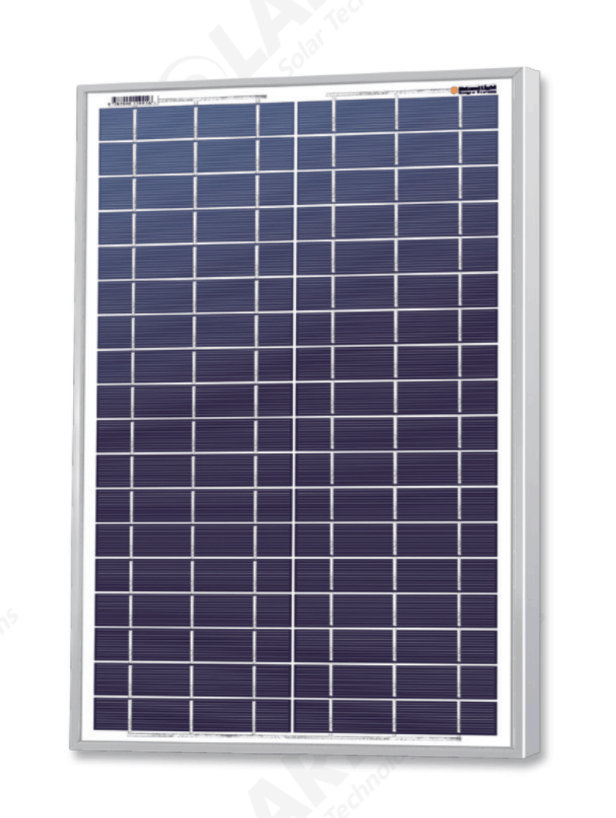
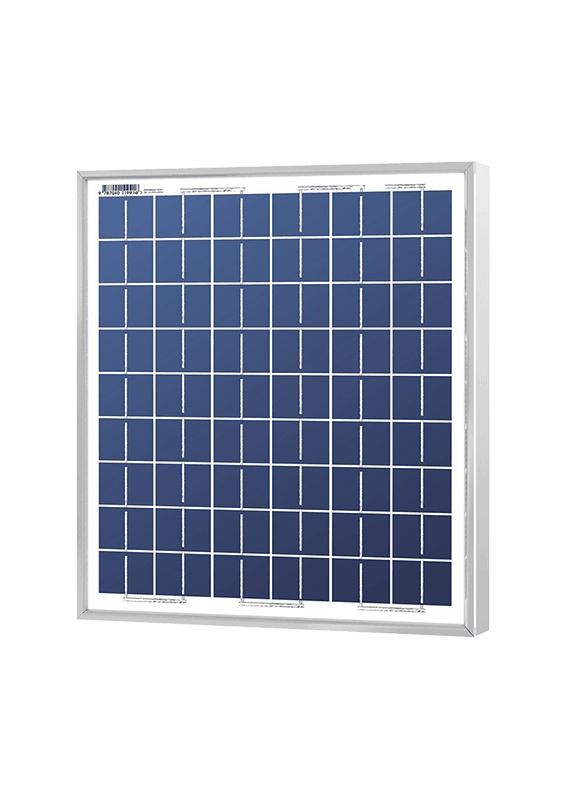
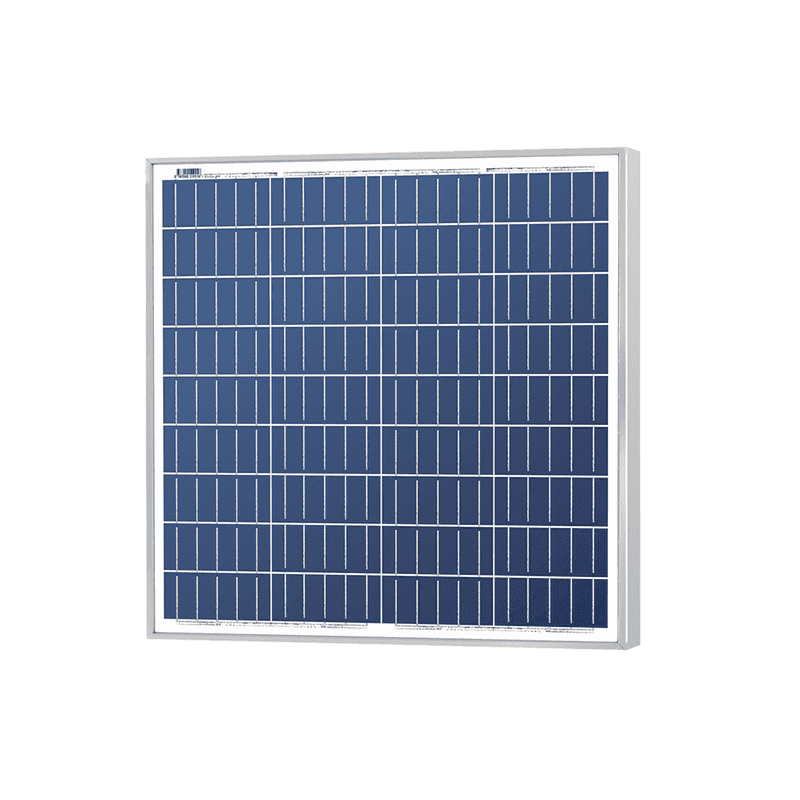
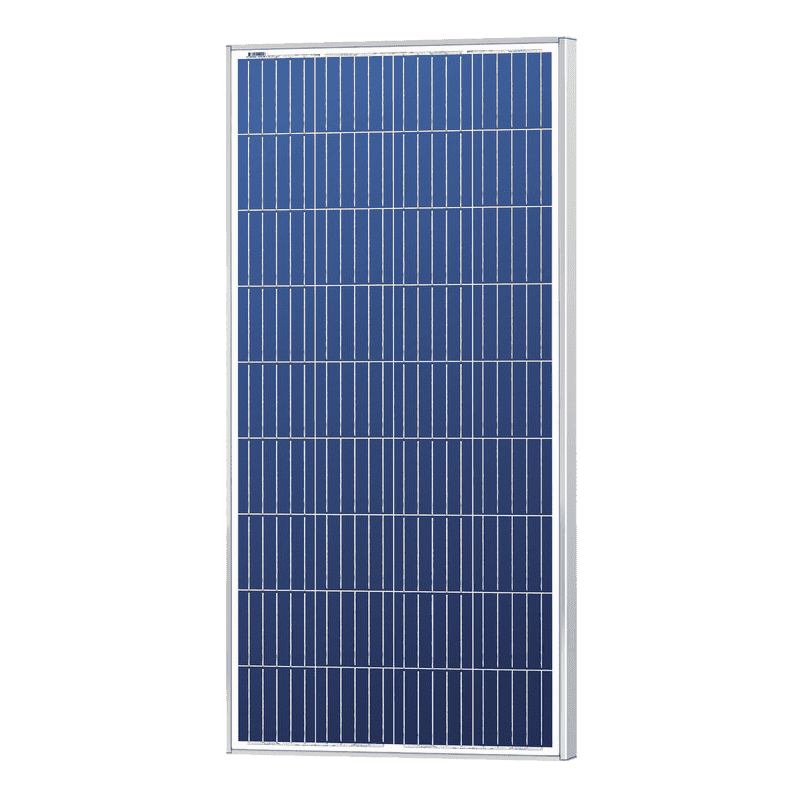
10 .58 17.3 4.2 1900100 $135
20 1.2 17.3 4.8 1920126 $200
30 1.67 18 5 1930126 $240
40 2.40 17.8 5 1900400 $255
Powerup's small wattage solar panels are an economical choice for small applications.

Sanyo solar panels Sanyo Solar Panels
Model Watts Amps Volts Shipping Weight (lbs.) Item Price
195 3.53 55.5 30.9 1930030 $1,100
200 3.59 55.8 30.9 1902003 $1,100
205 3.62 56.7 30.9 1930072 $1,158
Sanyo 190
30.9 $1,080

Sharp Solar Panels
Model Watts Amps Volts Shipping Weight (lbs.) Item Price
142 7.11 20 32 1301429 $699
167 7.1 23.5 36 1301673 not available
170 4.9 34.8 38 1301709 $835
175 4.95 35.4 38 1301750 $868
180 5.02 35.86 38 1318013 $950 Call.
80 4.67 17.1 19 1300800 $445
208 7.3 28.5 46.3 1302080 not available
216 7.53 28.71 46.3 1302166 $999

SolarWorld Solar Panels
Model Watts Amps Volts Shipping Weight (lbs.) Item Price
175 4.9 35.7 40 1716515 $850

Suntech Solar Panels
Model Watts Amps Volts Shipping Weight (lbs.) Item Price
85 4.83 17.6 21.3 X 47 inches, odd size 12 lbs. We have three of these in stock. $460
See Conergy 175's.

SunWize Solar Panels
Model Watts Amps Volts Shipping Weight (lbs.) Item Price
150 8.99 33.4 44 1911503 not available
SunWize's single crystal solar panels are the "work horses" of the industry. Call for availability: 1 (800) 472-1142

Uni-Solar Solar Panels
Model Watts Amps Volts Shipping Weight (lbs.) Item Price
64 3.88 16.5 24 1900643 Call.

Solar-powered parking lots
Donald Shoup
For the San Francisco Chronicle, Sunday, October 14, 2007

On hot, sunny days when air conditioners threaten to overload the power grid, solar power generation makes a lot of sense. Solar panels produce the most electricity exactly when demand peaks, so they reduce the load on conventional power plants at the right time. Solar panels also cleanly and quietly produce power exactly where it is consumed, so they help to prevent power outages caused by overloaded transmission lines.

Although the demand for electricity peaks on days when the sun shines brightest, solar power accounts for less than 1 percent of California's total electricity supply. But solar panels have found a promising new place in the sun on canopies above the parking lots that surround commercial and industrial buildings. The solar panels not only provide electricity for the buildings, but also shade for the parked cars.

Parking lots in asphalt-rich cities have great solar potential because the panels can be oriented to optimize power production during summer afternoons when electricity is most valuable. Google, for example, has installed solar canopies on its parking lots to satisfy 30 percent of its headquarters' power demand.

Although solar power can mitigate the increase in peak-hour power demand created by new buildings, developers rarely install solar panels above their parking lots. What can cities do to increase the use of parking lots for solar power production? One option is to incorporate solar panels into the parking requirements for commercial developments.

Cities already require parking spaces for all new buildings, and they regulate many features of the parking lots, such as the size of the spaces and their landscaping. Cities can also require that a share of the sunlit spaces be covered by solar panels to mitigate the increased peak-hour electricity demand created by new buildings.

The legal basis for requiring solar panels atop a parking lot is similar to the basis for requiring the parking lot itself - to mitigate an impact. If a development increases the demand for scarce energy during peak hours, the solar requirement for the parking lot will help to meet this peak-hour demand. The massive air conditioners for a new Wal-Mart Supercenter will increase the risk of power shortages on hot summer days, so it seems reasonable to require Wal-Mart to mitigate this risk. As part of a pilot program, Wal-Mart has already installed solar panels at 18 stores in California. Following this lead, cities could amend their zoning codes to require all new commercial development to include solar power in the parking lots.

Is there a downside to this plan? No one can say the solar arrays will mar the appearance of parking lots, because most parking lots are already ugly. Indeed, solar arrays will improve the look of most parking lots.

Would a solar requirement be anti-business or anti-development? California's Million Solar Roofs program provides generous subsidies for solar panels, and the federal government offers additional tax credits, so developers won't have to pay the full cost of a city's solar requirement. Because the parking lots for most commercial buildings are bigger than the buildings themselves, economies of scale for large installations can further reduce the cost of the solar panels. In contrast, few houses have properly-oriented roofs, unobstructed solar access and the structural capacity to support solar panels. Solar parking lots at commercial developments will therefore make cost-effective use of the government subsidies.

Solar arrays are highly visible evidence of a company's commitment to the environment, and one way for citizens to act green is to shop at stores that are green. If all new buildings come with solar arrays, vast parking lots without solar panels could even begin to look antisocial. The owners of some older buildings might update their parking lots with solar arrays to keep up with the green sheen of the new competition. Even those who don't own hybrid cars can act green by generating some electricity while they are parked in the shade.

Beyond their immediate economic advantages, solar-powered parking lots will provide a decentralized source of backup electricity in an emergency, such as a natural disaster or terrorist attack. Reducing the demand for energy from the electric grid will also reduce power plant emissions that contribute to air pollution. In the long run, parking lots that convert sunlight into electricity will reduce our fuel imports and even help to delay global warming.

Adding a solar component to the parking requirements for all new commercial buildings will ensure a steadily increasing supply of dependable, clean, renewable power. With only a small change to their zoning ordinances, cities can lead the way toward a solar powered future. We shouldn't wait until the next heat wave to think about getting solar power from our parking lots.

Donald Shoup is a professor of urban planning at the University of California, Los Angeles.


All Products Index
Appliances
Back-up Power
Batteries
Battery Racks
Cables
Charge Controllers
Disconnects
    - Breakers
    - Fuses
Grid-Tied Power Systems
Inverters
Meters
Package Systems
Pre-Wired Power Centers
RV & Marine Power
Solar Panels
Solar Panel Racks
    or Mounts  
Solar Panel Trackers
Water Pumps
Wind Generators/
    
- Wind Turbines
Wiring

Use this
Pollution Calculator
to see how your use of solar energy will reduce greenhouse gases and other toxic wastes.


Back to Top


Back to Top


Back to Top


design by: Shasta Marketing